
flaga RPTekst łatwy do czytania

The Economic Power of Learning: New Research on African Nations

The Economic Power of Learning: New Research on African Nations

How critical is education for economic development in Africa? Stefano Pagliarani in his latest study published in the quarterly journal "Edukacja" examines the relationship between human capital (as measured by Harmonized Learning...

IBE PIB presents the Graduate Profile for post-primary school students

IBE PIB presents the Graduate Profile for post-primary school students

We invite you to take a look at the Graduate Profile for post-primary school students. It is a modern tool supporting the development of competences and preparing young people for the labour market and further education.
Microcredentials are an opportunity for higher education institutions in Poland

Microcredentials are an opportunity for higher education institutions in Poland

Polish higher education institutions have the opportunity to join the global trend of microcredentials – short, digital forms of confirming acquired knowledge and skills. This solution could change the way of learning, teaching and...

Announcing the winners of the competition for the best diploma or doctoral thesis

Announcing the winners of the competition for the best diploma or doctoral thesis

The jury of the IBE PIB competition for the best thesis or doctoral dissertation in the field of education – 2025 edition has selected the winners.

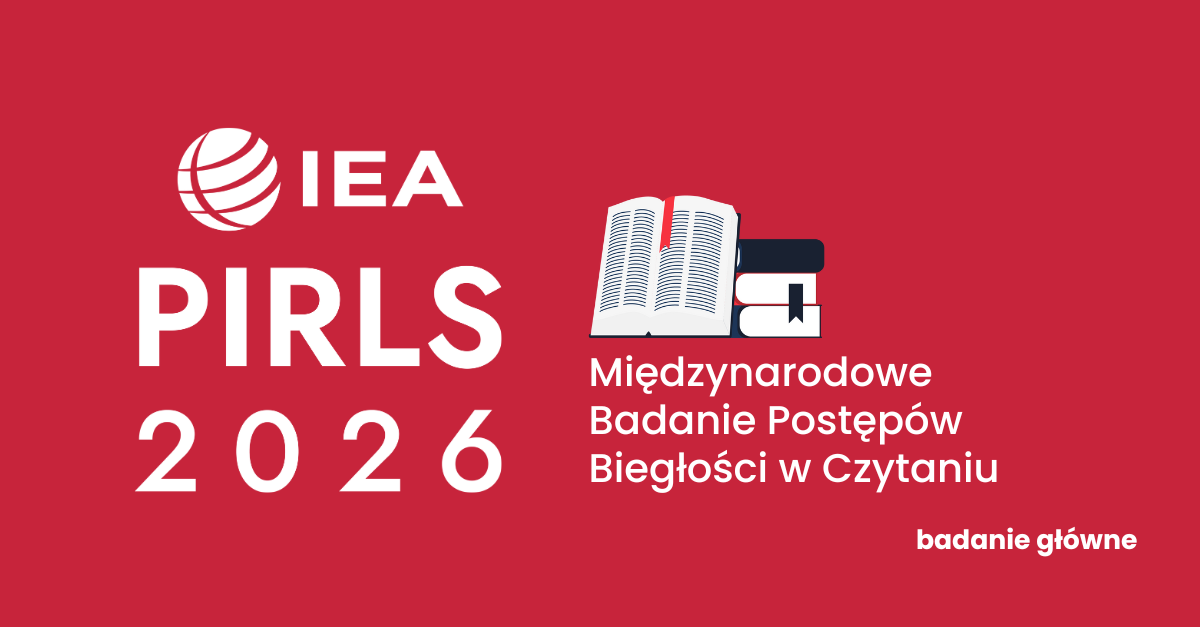
W marcu i kwietniu 2026 roku w 150 szkołach w całej Polsce uczniowie wezmą udział w Międzynarodowym Badaniu Postępów Biegłości w Czytaniu  PIRLS 2026. W Polsce będzie je realizować Instytut Badań Edukacyjnych – Państwowy Instytut Badawczy. Przedstawiciele krajowego zespołu badawczego już w styczniu zaczną się kontaktować  ze szkołami wylosowanymi z badania.

Badanie PIRLS mierzy umiejętności czwartoklasistów z zakresu rozumienia czytanego tekstu. Prowadzone jest na reprezentatywnej, losowej próbie uczniów, co pozwala na wnioskowanie o umiejętnościach czytelniczych uczniów klas czwartych na poziomie całego kraju, a także na porównania wyników między krajami biorącymi udział w badaniu. 

Uczniowie na specjalnie przygotowanych komputerach będą czytać teksty i rozwiązywać zadania, a następnie wypełnią ankietę dotyczącą m.in. ich opinii i postaw, a także doświadczeń edukacyjnych. W badaniu poza uczniami wezmą udział także dyrektorzy placówek wylosowanych do badania, nauczyciele języka polskiego oraz rodzice uczniów biorących udział w badaniu.