

flaga RPTekst łatwy do czytania

Microcredentials in Polish school education

Microcredentials in Polish school education

Grades are becoming less and less effective in motivating pupils to learn. Schools are therefore looking for new ways to strengthen engagement and a sense of purpose in learning. One solution is microcredentials – precise, understandable, and genuinely...

Generation Z needs agency and a school that teaches independence

Generation Z needs agency and a school that teaches independence

Does school prepare young people for independent life in a rapidly changing world? An increasing body of research shows that Generation Z students need not only knowledge, but also agency, critical thinking, and a sense of influence over...

We are joining the International Civic and Citizenship Education Study!

We are joining the International Civic and Citizenship Education Study!

Poland will take part in the International Civic and Citizenship Education Study (ICCS) for the third time. The ICCS 2027 study will be conducted by IBE PIB, commissioned by the Ministry of National...

The digital evolution in the classroom. Results of the ‘Technological innovations in schools’ pilot project

The digital evolution in the classroom. Results of the ‘Technological innovations in schools’ pilot project

The digital transformation of schools is about more than just new equipment. Strategy, competence and cooperation are what count. Check out the results of the pilot study and learn about the seven recommendations that support the...

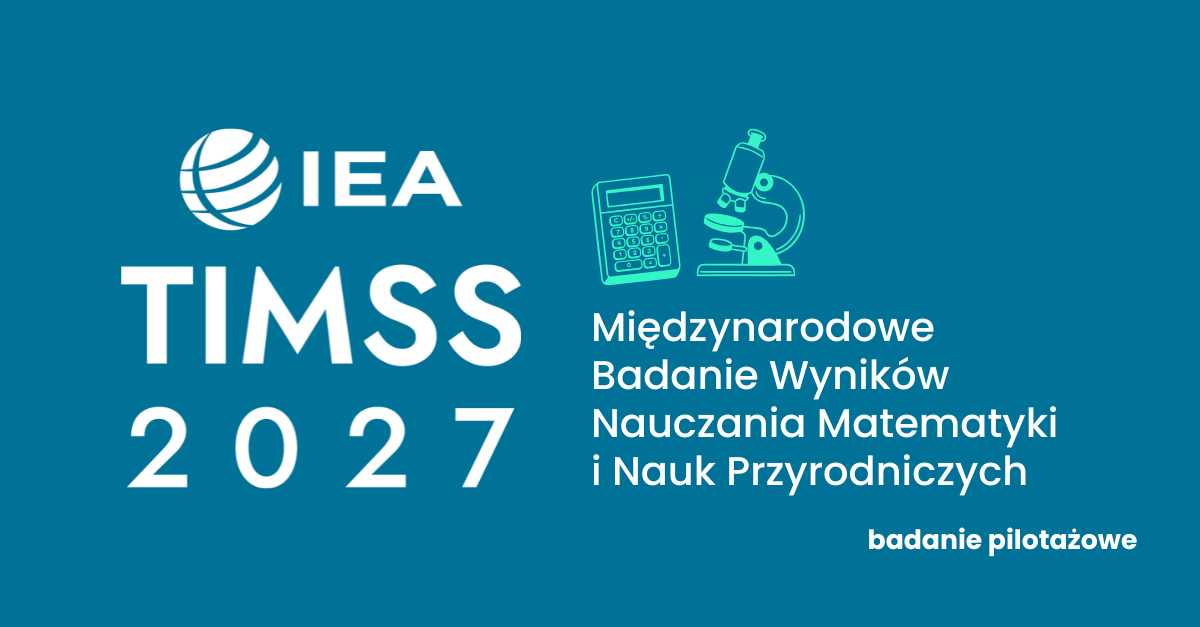
W marcu 2026 szkoły z województw małopolskiego, śląskiego i pomorskiego wezmą udział w badaniu pilotażowym TIMSS 2027. TIMSS mierzy wiedzę i umiejętności uczniów z zakresu matematyki i nauk przyrodniczych.

Pilotaż badania pozwoli na sprawdzenie narzędzi badawczych oraz procedur realizacyjnych i jest częścią przygotowań do badania głównego, które odbędzie się 2027 roku. W poprzednich edycjach badania w Polsce uczestniczyli tylko uczniowie klas 4, natomiast najnowsza edycja będzie prowadzona zarówno wśród czwartoklasistów, jak i – po raz pierwszy – ósmoklasistów. Dzięki temu zyskamy porównywalne dane na temat umiejętności uczniów z zakresu matematyki i nauk przyrodniczych na początku i pod koniec nauki w szkole podstawowej. W badaniu wezmą również udział nauczyciele i dyrektorzy szkół, a także rodzice uczniów klas czwartych.

W najbliższym czasie polski zespół badania TIMSS 2027 rozpocznie współpracę ze szkołami wylosowanymi do badania pilotażowego.